How to use this mock guide
Use this page before and after mocks. Before a mock, decide what you are testing: section order, skipping discipline, DILR set selection, QA first-pass strategy or VARC accuracy. After the mock, do not begin with emotion. Begin with evidence. Which questions took too long? Which wrong answers came from concepts? Which came from rushing? Which unattempted questions were actually solvable?
A mock should produce a short action list. If the list is too long, it will not be used. Choose two or three repairs for the next week. For example: revise percentage applications, practise two tournament DILR sets, and review RC inference errors. This makes the next mock part of a feedback loop rather than a fresh gamble.
When to start mocks
Students often wait for perfect syllabus completion before taking mocks. That delay can hide timing and selection problems. Early mocks can be diagnostic even if the score is modest. They show whether you can sit through the paper, switch sections, leave traps and recover after a difficult block. Later mocks become rehearsal. They should test a more stable attempt plan.
Mock frequency should be sustainable. If analysis takes several hours, leave enough space for revision. Taking mocks on consecutive days without review can create fatigue and confusion. On the other hand, avoiding mocks for weeks can make preparation too comfortable. A balanced rhythm depends on stage: fewer mocks with deeper concept repair early, more performance rehearsal closer to the exam window, always subject to official timelines and personal readiness.
How to analyse a mock
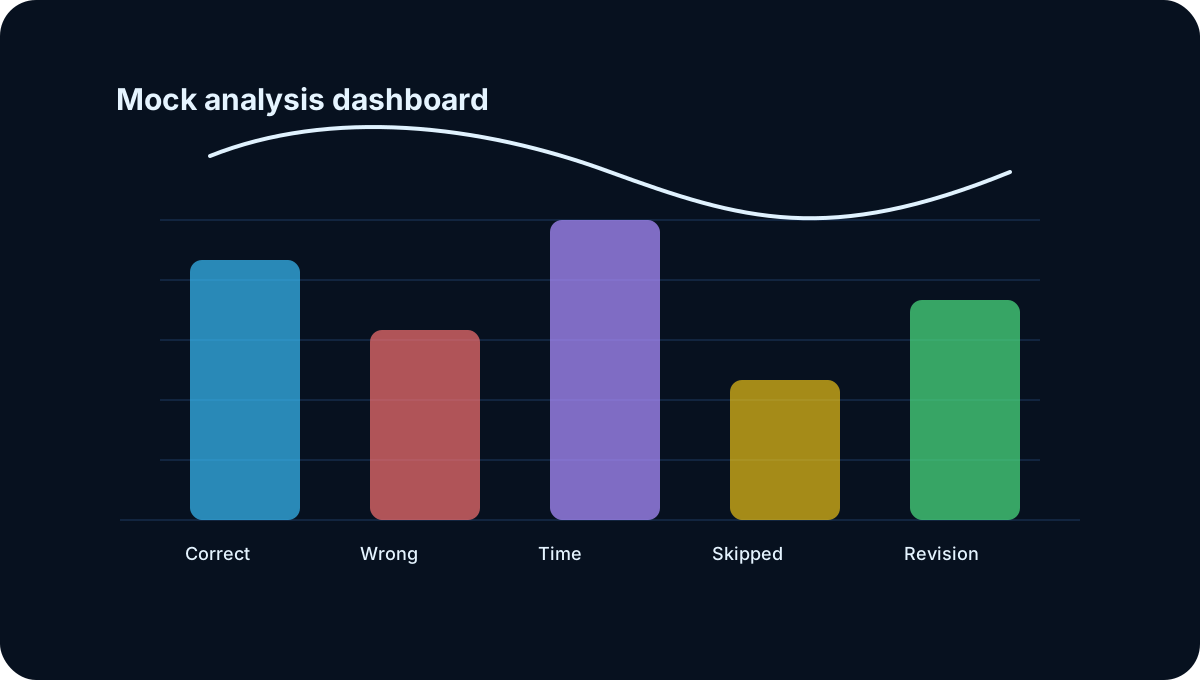
Do not analyse only wrong answers. Correct but slow questions matter because they reveal inefficient methods. Unattempted but doable questions matter because they reveal selection weakness. Time sinks matter because they show where confidence became stubbornness. A good mock analysis table separates outcome from cause.
A strong review also asks what happened before the mistake. Did the previous DILR set drain confidence? Did a difficult VARC passage cause rushing in verbal ability? Did an early QA trap make you abandon a good first-pass plan? These transitions are easy to miss when you analyse questions one by one, but they often explain why a prepared student performs below practice level.
| Question type after mock | Question to ask | Next action |
|---|---|---|
| Correct but slow | Was there a shorter method or better selection decision? | Re-solve with a time cap and note the better route. |
| Wrong attempted | Was it concept, calculation, reading, logic or pressure? | Classify the error before doing more questions. |
| Unattempted but doable | Why was it missed during scanning? | Improve selection cues and return strategy. |
| Time sink | What made the question attractive despite low return? | Create a skip rule for similar cases. |
| Guess or panic answer | What signal was ignored? | Review temperament and section order. |
Mistake notebook
A mistake notebook should be practical, not decorative. For each error, record the section, topic, error type, corrected idea and retest date. In QA, distinguish concept gaps from calculation slips. In DILR, distinguish bad representation from bad selection. In VARC, distinguish unsupported inference from misread tone. These distinctions prevent vague revision.
Before the next mock, read the notebook for patterns. If the same error appears three times, it becomes a priority. If a topic appears once and then disappears, do not overreact. Mock scores naturally fluctuate, but repeated error types are signals. The notebook keeps you from changing strategy after every emotional high or low.
Common mock-test mistakes
The first mistake is treating the mock score as a verdict. A mock is information, not identity. The second mistake is comparing raw scores without considering difficulty, section balance and personal weak areas. The third mistake is taking too many mocks without targeted revision. More testing does not automatically create learning.
Another common mistake is ignoring attempt behaviour. Did you read all options in QA when estimation would have worked? Did you stay inside one DILR set after it stopped moving? Did you change a VARC answer without evidence? These behaviours decide marks. Mock analysis should therefore include temperament, not only topic revision.
CAT mock tests FAQ
How many CAT mocks should I take?
The number depends on preparation stage and analysis quality. A smaller number of deeply reviewed mocks is more useful than a large stack of ignored scorecards.
When should I start paper-style mocks?
Start once you can attempt each section with basic familiarity. Early mocks are diagnostic; later mocks are performance rehearsal.
What should I do after a bad mock?
Do not immediately take another mock. Analyse selection errors, revise weak concepts and solve targeted sets before retesting.
Practice next
Pair every mock with focused CAT practice.
Use mock analysis to choose your next QA, DILR and VARC repair blocks. The mock is the diagnosis; practice is the treatment.